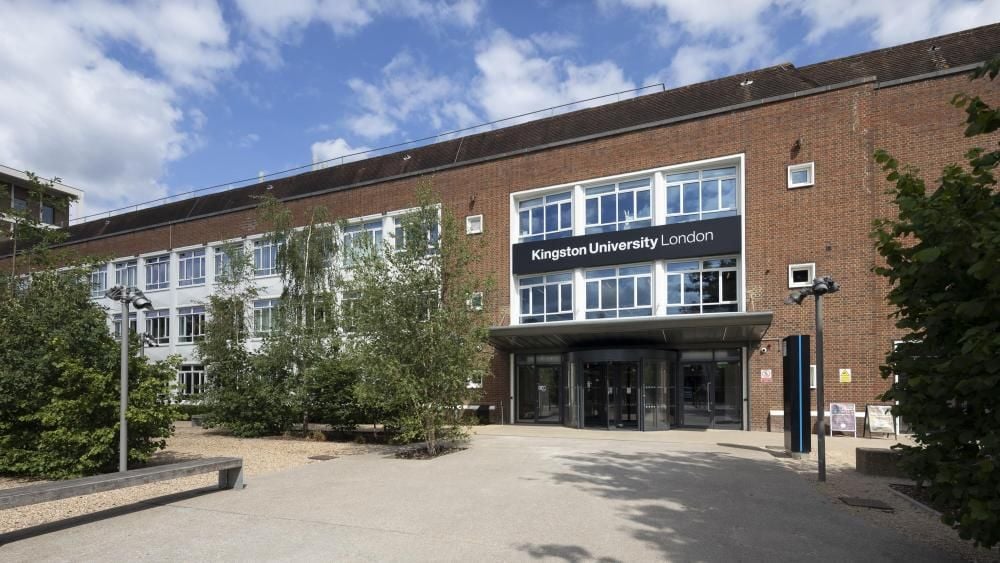
This master's course at Kingston University in London looks at how artificial intelligence and digital platforms are changing media and communication.
Kingston UniversityWIN Education Recruitment PartnerStudy in UK operates as part of the WIN Education franchise. WIN Education has a student recruitment agreement with Kingston University, and Study in UK provides student recruitment and application support within the scope of that agreement.The availability of application support may vary by course, intake, applicant nationality or country of application. Please contact our team to confirm whether we can support your specific application.Kingston School of Art, London
Tuition per year£22,300as publishedThis fee is the one the university prints on its own page for this course, read off that page on the date shown. It is their figure and not an estimate of ours. Fees are set a year at a time and can change between the year you read this and the year you start, so ask us to confirm it before you rely on it.
IELTS
6.5 as publishedThis English requirement is the one the university prints on its own page for this course, read off that page on the date shown. It is their requirement and not a reading of ours. Departments raise and lower what they ask for during the year, and some ask for a minimum in each paper as well as overall, so ask us to confirm it before you book a test.
Emerging technology focusThe course examines the effect of AI, algorithms and digital platforms on current media.
Theory and practiceAcademic research sits alongside creative projects and practical media work.
Portfolio buildingAssessments and the final project help students assemble research and creative work.
London settingStudents can use Kingston School of Art's community and visit cultural institutions in London.
Overview
The MA Media and Communication is taught by Kingston School of Art and mixes media theory with creative strategy and research methods. It looks at how AI, machine learning and large language models change the way media is made, shared and used.
The degree totals 180 credits. Three compulsory modules cover media theory from mass media to new media, media and globalisation, and a 60 credit dissertation. Students then pick two optional modules, such as Television Production or Freedom, Censorship and Subversion. Availability of options depends on demand.
The dissertation can be a written project of about 12,000 words or a practice-based project with a critical report. Students work with an academic supervisor, build a portfolio, and join field visits to London institutions including the BFI Mediatheque, Tate Modern and the V&A. Some students may move to a Professional Placement mode after 120 credits.
Graduates may work in media and communications, public relations, journalism and publishing, broadcasting, digital content, cultural industries or public-sector communications. Further research or a PhD is also an option.
Curriculum
Entry requirements
Academic
Applicants should normally hold a UK honours degree at 2:2 or above in a relevant subject. Those with relevant professional experience may also be considered if they can show the academic ability needed.
English
IELTS 6.5 as publishedThis English requirement is the one the university prints on its own page for this course, read off that page on the date shown. It is their requirement and not a reading of ours. Departments raise and lower what they ask for during the year, and some ask for a minimum in each paper as well as overall, so ask us to confirm it before you book a test.
Career opportunities
The page names a range of media, communications and creative roles and sectors, and mentions further study towards a PhD.
Roles graduates go into
Research or data analyst
Policy officer
Social researcher
Programme or project officer
Consultant
Caseworker or support practitioner
Where they work
Media and communications
Public relations and corporate communications
Journalism and publishing
Radio and broadcasting
Digital media and social media content creation
Cultural and creative industries
Government and public-sector communications
After the course
A master's is close to standard for research and policy posts, and some routes, such as social work, require a qualifying degree and registration to practise.
Fees and funding
Tuition, international students£22,300 as publishedThis fee is the one the university prints on its own page for this course, read off that page on the date shown. It is their figure and not an estimate of ours. Fees are set a year at a time and can change between the year you read this and the year you start, so ask us to confirm it before you rely on it.
Not the university you were looking for?Tell us which one and we will come back to you on whether we can take your application there.

 University College London