Foundation entryThe year is meant for students with non-standard entry qualifications.
Direct progressionSuccessful students go on to the Biomedical Science BSc in the School of Biosciences.
Varied teachingMethods include lectures, lab sessions, field studies and group work.
Accredited degreeThe linked Biomedical Science degree is marked as accredited.
Overview
This course is a Biomedical Science BSc that includes a foundation year. It is aimed at applicants whose qualifications do not meet standard entry, and it prepares them for degree-level study in the School of Biosciences. Applications are made through UCAS using code B905.
The foundation year is worth 120 credits and is made up of several modules, with the structure set out on a separate page. It builds study skills and subject knowledge. After it, students move on to the three-year Biomedical Science degree, which covers the human body from genes to whole-body systems in health and disease, with practical lab work.
Teaching methods vary and may include lectures, seminars, problem solving classes, field studies, tutorials, group work, online activities, revision workshops and laboratory sessions. The foundation year is run by the Lifelong Learning Team in the School of Education, which works with adult learners.
Progression to the School of Biosciences depends on meeting thresholds that differ between courses and departments, and these are discussed with applicants at interview. The page does not list specific careers for graduates.
Entry requirements
AcademicThe page gives no specific entry requirement for the foundation year. It says the year is for students with non-standard entry qualifications, and the linked degree asks for A Levels AAB.
Career opportunities
To work as a biomedical scientist in an NHS laboratory the course must be IBMS accredited and you must complete a registration portfolio, so check both before applying. Without that route the degree still leads into research, industry and diagnostics.
Roles graduates go into
- Biomedical scientist, once registered
- Laboratory or research scientist
- Clinical trials associate
- Quality and validation scientist
- Medical laboratory assistant
- Technical specialist for diagnostics suppliers
Where they work
- NHS pathology laboratories
- Private diagnostics providers
- Pharmaceutical and biotechnology companies
- Research institutes and universities
- Public health laboratories
After the course
HCPC registration through an IBMS accredited degree and a completed registration training portfolio.


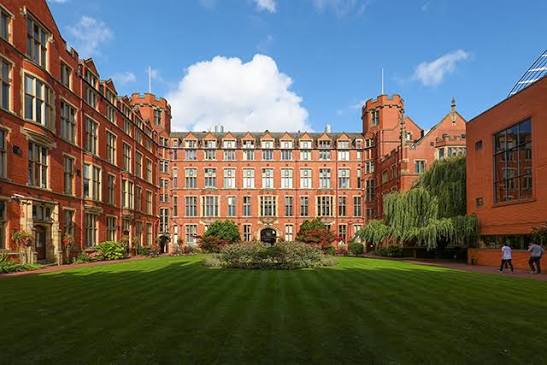
 Manchester Metropolitan University